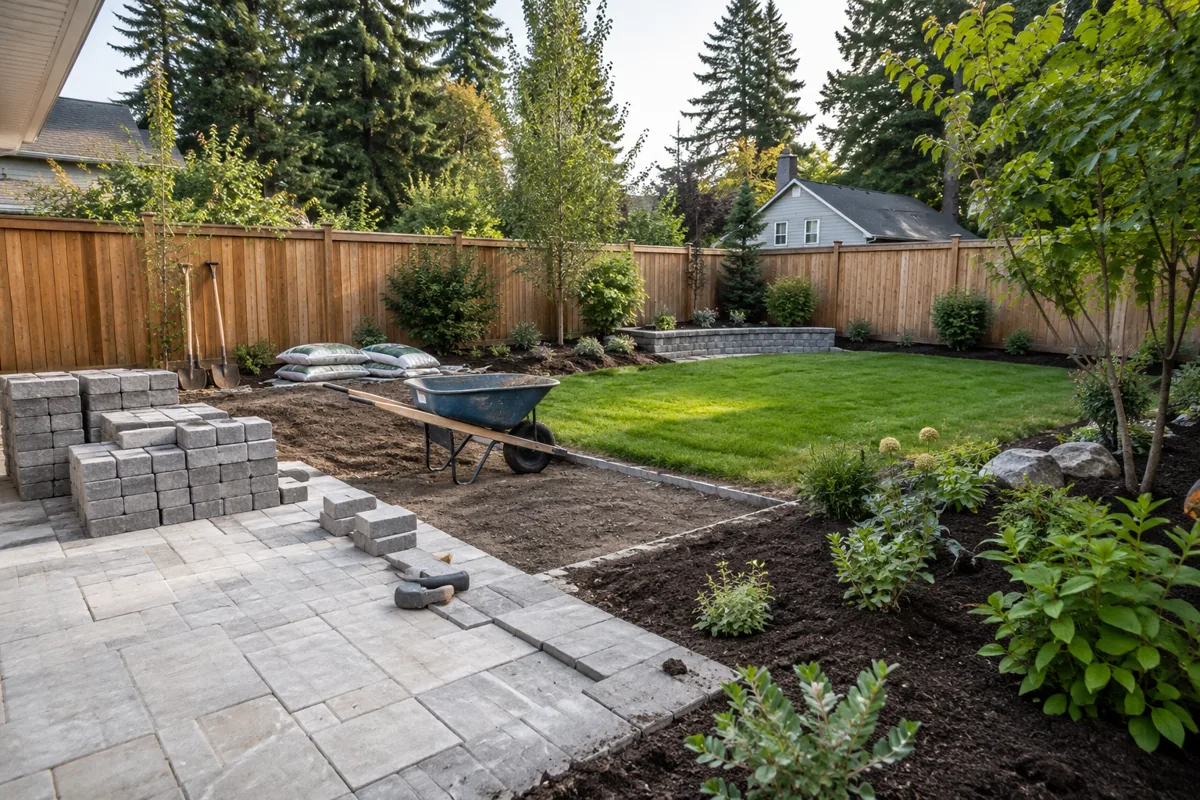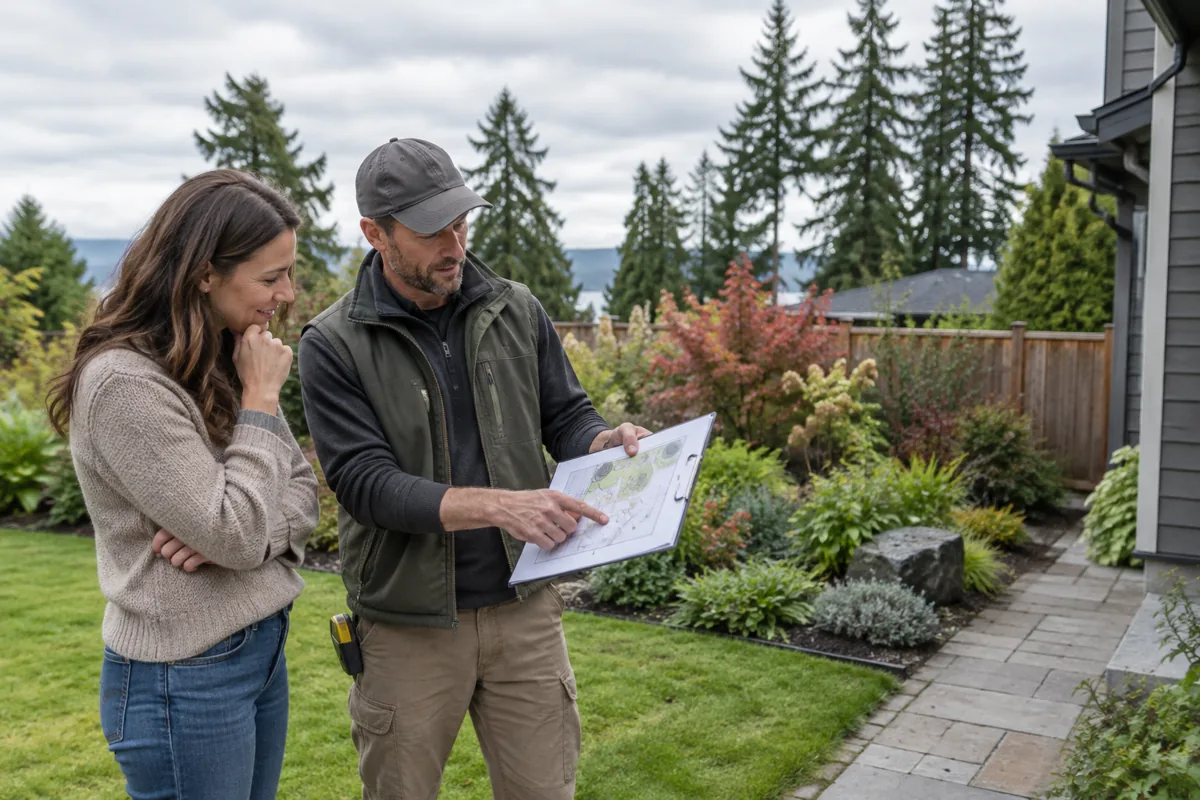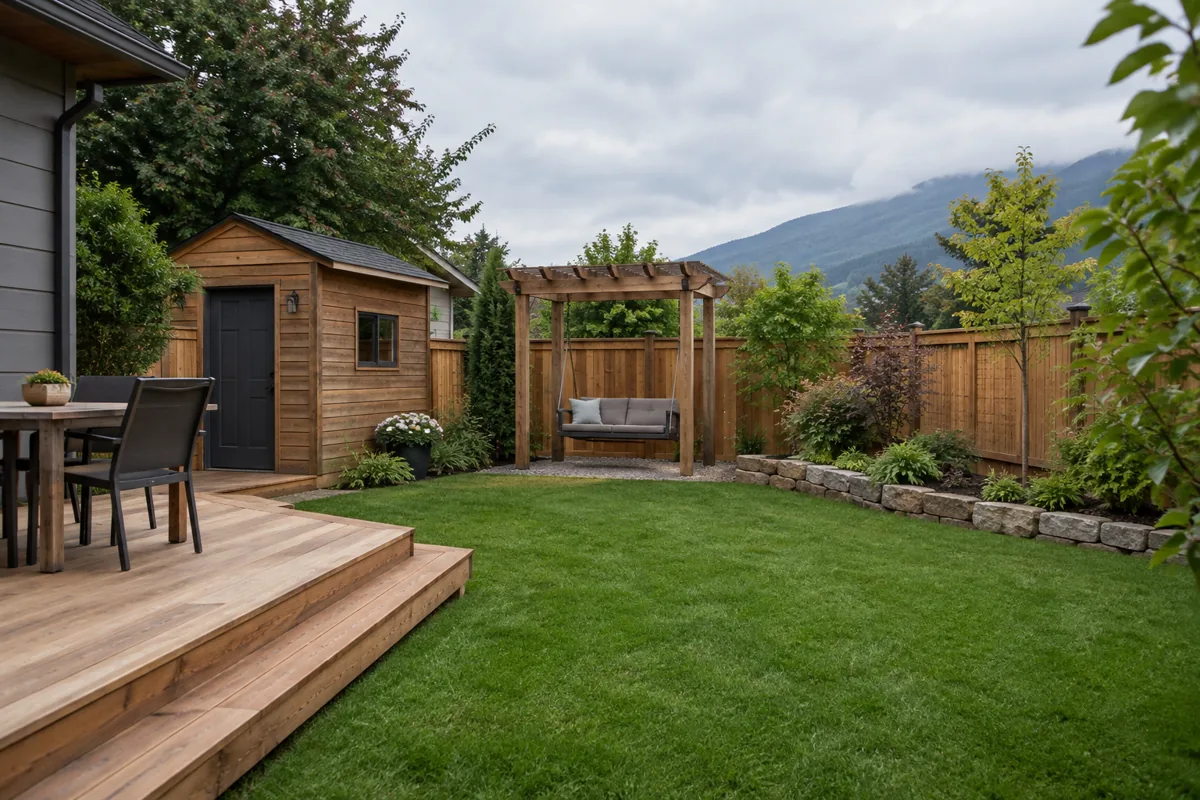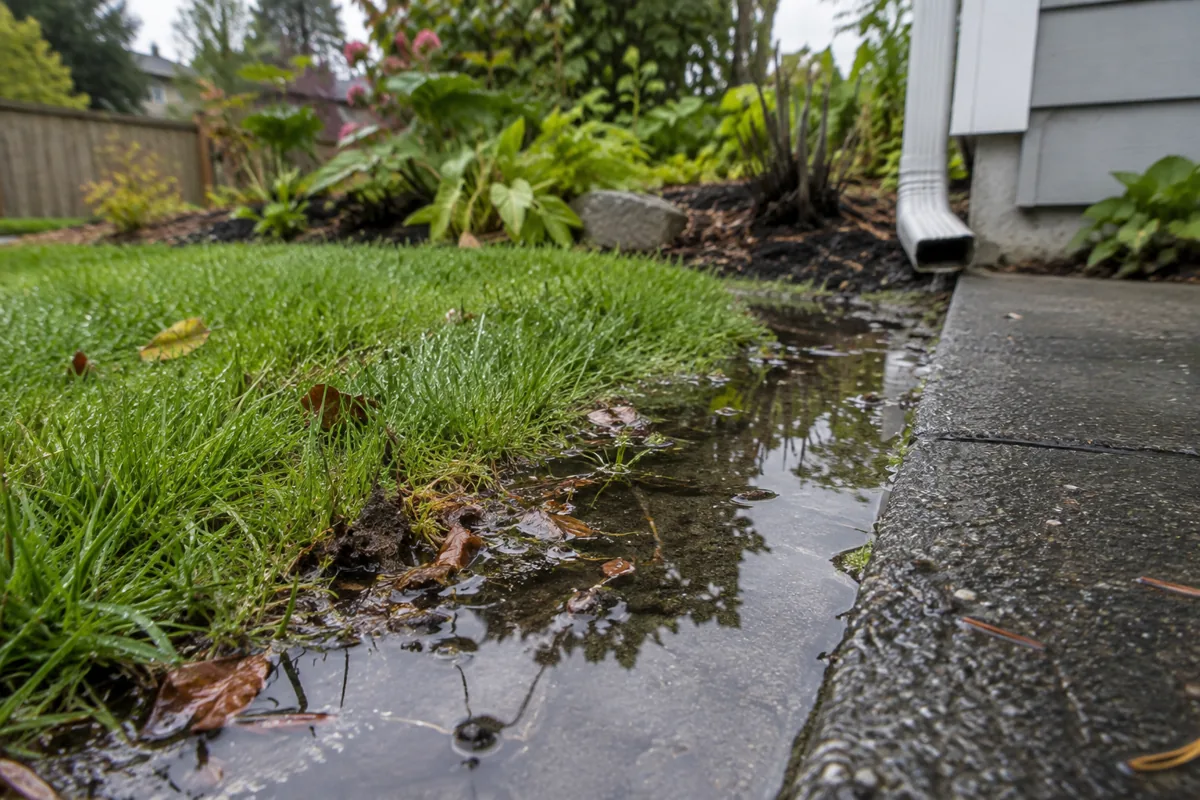
Record where water appears, where it flows, and how long it remains before choosing drains or adding soil. Those observations help a professional investigate the cause, plan the outlet, and price the restoration. A Vancouver lane-side garden and a Fraser Valley backyard need their own assessment of soil, groundwater, and flooding; the city name cannot supply that diagnosis.
Document the problem before covering it
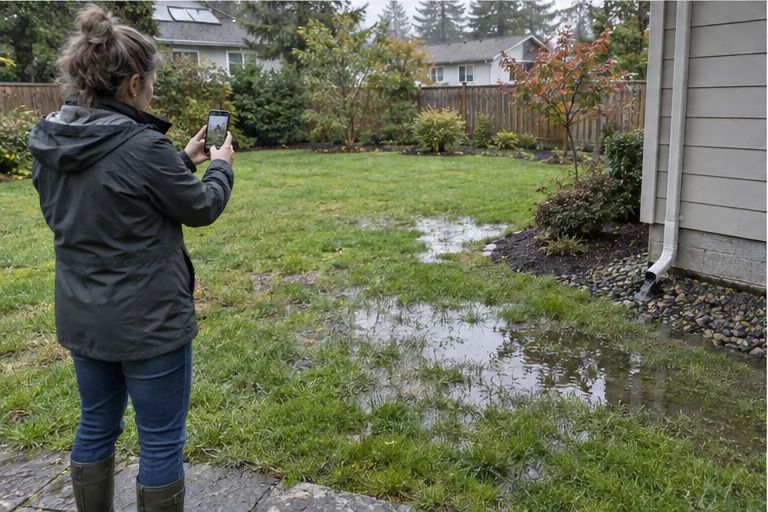
If it is safe to do so, take photos of the area while it is raining and after the rain has stopped. Record where water first pools, its direction of travel, and how long it takes to drain. A wide shot is usually more helpful than a close-up of a single puddle because it shows you how the surrounding levels and surfaces are contributing to the mess. Add a sketch showing downspouts, existing drains, and recent landscape changes.
Ask for an explanation before a solution
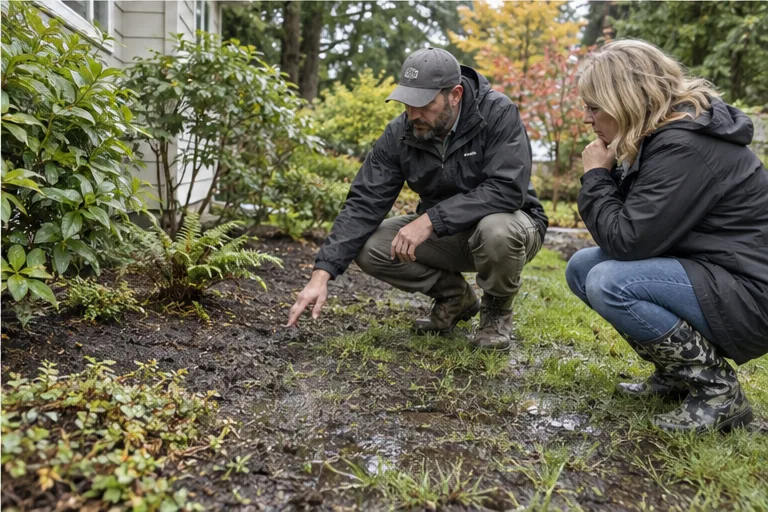
Don't just accept a solution; ask for the "why." Ask the contractor to explain the likely cause of the issue and what specific investigation they need to do to prove it. Ask them which alternatives they thought about and what the goal of the proposed work actually is. Correcting surface drainage differs from repairing an underground drain or stopping water from entering a building, and you might need different specialists for each. The quote should address the observed problem and explain the proposed work, rather than simply name a product or a length of trench.
Establish where the water will go
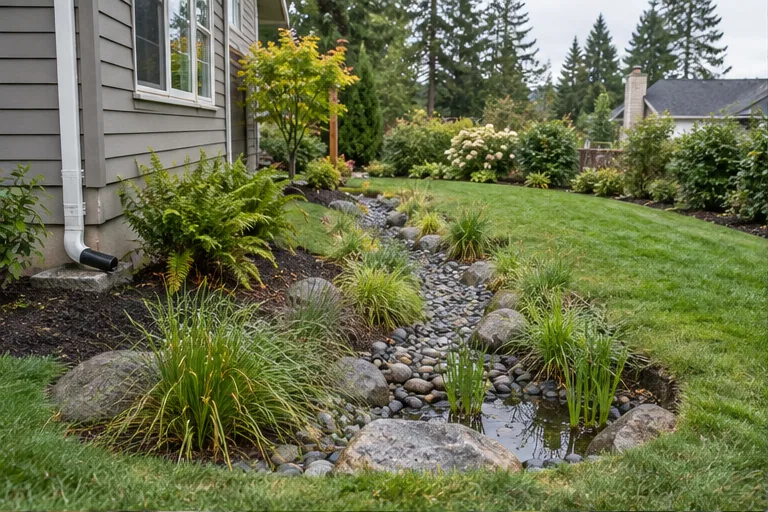
Resolve the water's destination before excavation. Ask your contractor to show you the proposed route and the final destination for the runoff, and ask if any specialist designs or specific municipal approvals are required. Just moving water from one spot to another doesn't mean you've solved the problem. The scope of work should clearly state what information is still missing and how that will be confirmed before anyone starts digging.
Plan the excavation and restoration together
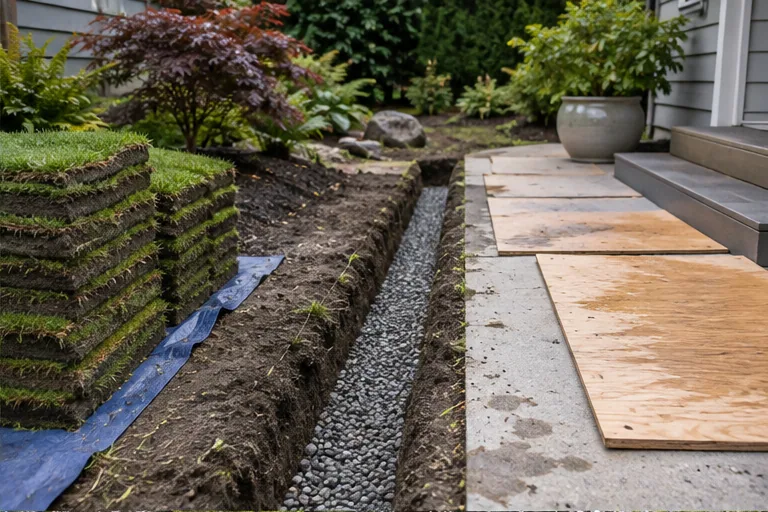
Decide early on who is responsible for arranging utility locates and identifying any private services that need to be marked. For official utility location on member utilities, you must start with BC 1 Call and follow their current rules for any digging. Agree on equipment access, material storage, and debris removal. Finally, be very specific about which parts of your lawn, paving, or garden beds need to be restored once the job is done.
Ask how the result will be checked
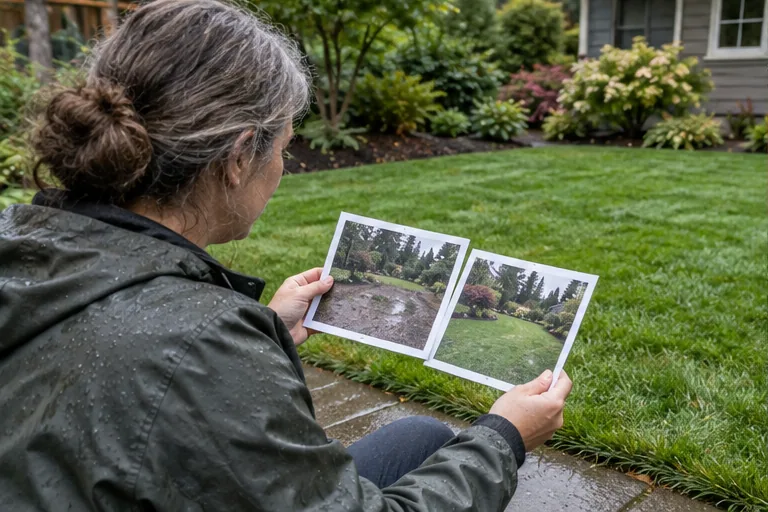
The proposal should tell you exactly what a finished job looks like, what kind of records you will get, and what happens if the drainage issue comes back. You should keep your own records too, including before-and-after photos and drawings showing where the drains were installed. Once the drains are buried, these records help with maintenance and future projects.
A useful record after rain
Use these observations to make a professional site visit more productive. Stay clear of flooding, unstable ground, and other hazards.
| Observation | Record |
|---|---|
| When it starts | Date, approximate time, and whether water appears during or after the rain. |
| Where it moves | Wide photographs showing the puddle, nearby ground levels, and downspouts. |
| How long it stays | Follow-up photographs taken from the same safe viewpoint as the initial photos. |
| What changed | Any recent paving, planting, excavation, or alterations to existing drainage. |
Enquiry checklist.
- Record exactly where and when water appears.
- Identify which investigations are included in the quote and what must be confirmed before construction begins.
- Confirm the water route, necessary approvals, and utility checks.
- Include the cost of restoration and agree on how to verify the results.
Diagnose wet ground before choosing a garden feature
A rain garden is a design choice that should only happen after you understand runoff, how your soil performs, and where the overflow will go. It is not a fix for water pooling against a foundation or a broken underground drain. Once the assessment shows a planted feature is actually suitable, you can look at the water-wise garden guide. Keep your diagnosis, the proposed water route, and the restoration drawings all together so your garden design actually respects the drainage solution.