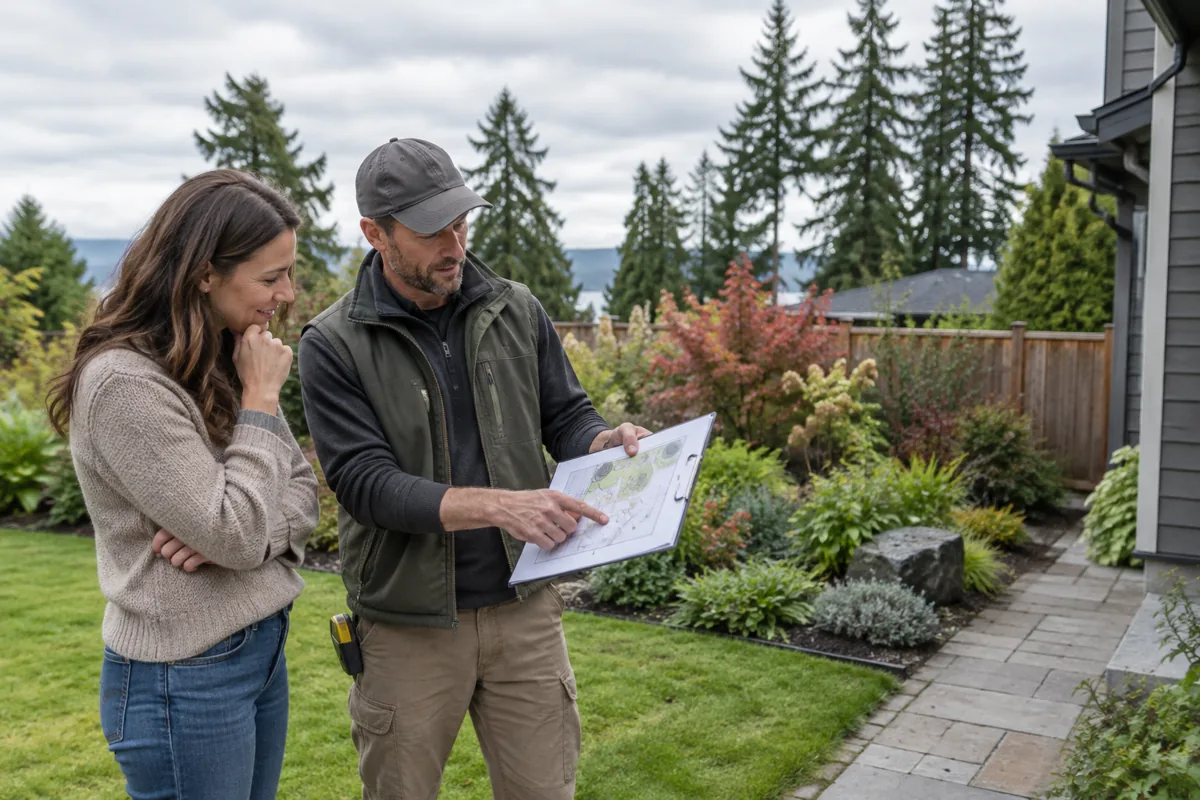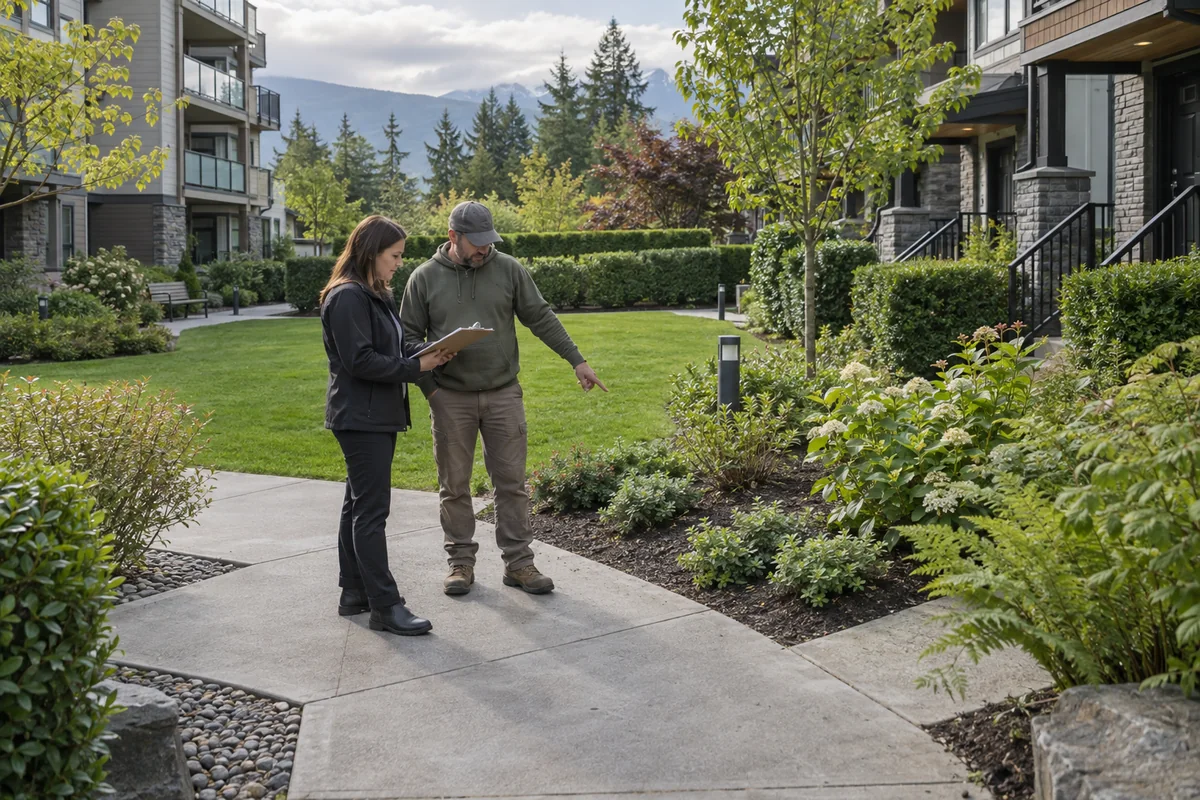
Define the maintenance areas, service calendar, and approval process for extra work so residents, council, and contractor share the same scope. This checklist is built for shared grounds across Metro Vancouver and the Fraser Valley, covering everything from Surrey townhouse complexes to Burnaby apartment gardens. Use it to build one consistent brief so you can compare bidders fairly. This is a practical procurement tool, not a requirement that every strata must run a formal tender or hunt for a specific number of bids.
Map responsibility before measuring the grounds
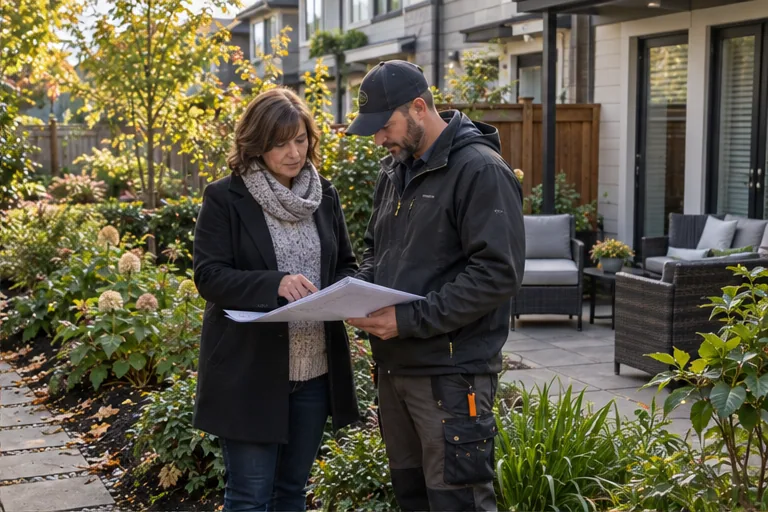
Mark common property, limited common property, and separately maintained gardens on the site plan. Before you decide what the shared contract covers, double-check the strata plan, your bylaws, and who is actually responsible for what. Just because a flower bed sits next to a front door doesn't mean it's automatically included or excluded from the contract. Include the agreed maintenance boundaries with the tender so contractors price the same areas and residents know where the crew will work.
Give every bidder the same site inventory

Provide a full list: lawn areas, planting beds, hedge lengths, trees, irrigation zones, and paths. Include photos and note any specific challenges like slopes, stairs, gates, loading points, or storage areas. If your measurements are just estimates, tell the bidders to confirm them during their site visit. A courtyard in Burnaby or a stairway in North Vancouver might change how they work, but ask what work any proposed "city surcharge" covers.
Compare the service calendar and billing calendar

Ask them how many months are covered, how often they will visit, and which tasks happen at specific times of the year. You should see the annual price, the installment schedule, and a list of optional visits. You also need to know how things like holidays, storms, or muddy ground conditions affect their schedule. A monthly contract that stops during the winter isn't a direct comparison to a year-round service unless you account for the missing seasonal work.
Define mowing and bed care separately

Be specific about mowing, edging, leaf collection, weeding, and any agreed-upon soil or mulch work. Make it clear if grass clippings stay on the lawn, go into a specific collection system, or get hauled away entirely. Ask bidders to separate a one-time "initial recovery cleanup" from the regular routine maintenance. Agree on how to review the condition of the grounds as well as the number of visits.
Set boundaries for hedge and tree work
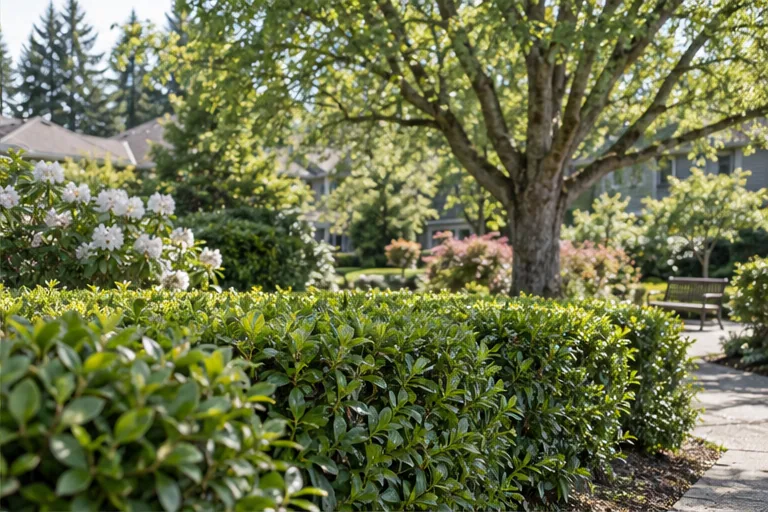
Specify what routine hedge trimming looks like and the agreed dimensions, including which sides they can actually access. Major tasks like tree assessments, removals, stump work, or heavy reductions should be treated as separate services. For those in North Vancouver or Langley, verify if you are under City or District/Township rules before checking local tree regulations. Clearly name who is responsible for getting approvals and specialist input so the maintenance contract isn't mistaken for a blanket permission to cut down trees.
Separate irrigation visits from repairs
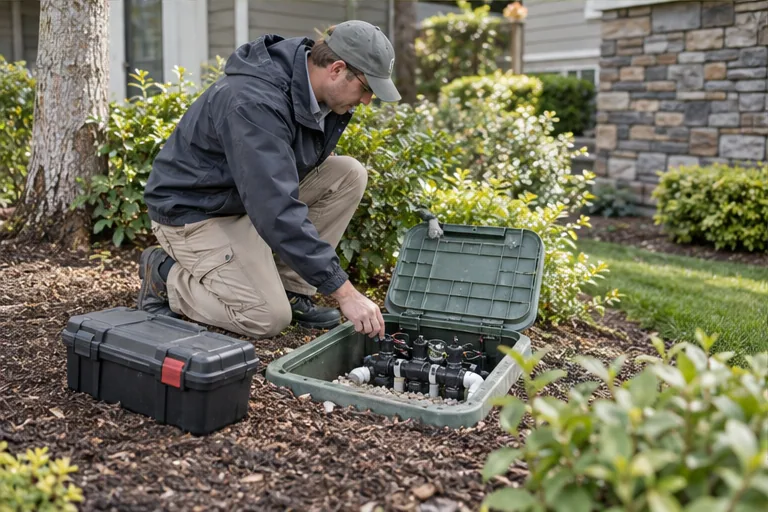
State whether things like startup, winterization, seasonal inspections, and controller programming are included in the base price. If repairs or new parts are needed, they should be itemized or managed under a clear allowance. Make sure the contractor has access to the controller and define who owns the operating schedule. Ask for a record of all zones and any changes made so a new manager or a different contractor can take over without confusion.
Assign local watering checks to a named person
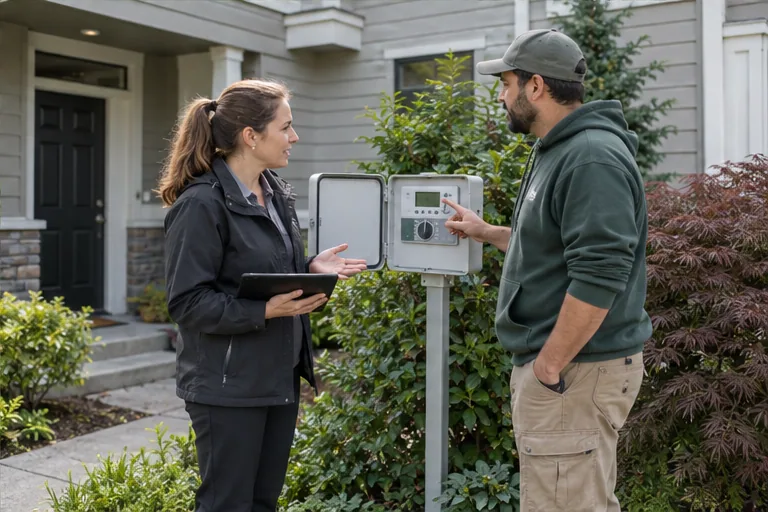
In Surrey and Chilliwack, watering schedules for apartments and townhouses use the complex address rather than individual unit numbers. Make sure that address is in your grounds brief. For the Abbotsford or Mission areas, look at Our Water Matters instead of the Metro Vancouver timetable. You need to name exactly who is responsible for checking restrictions, updating shared controllers, and letting residents know about the rules. If neither contractor nor council takes responsibility because each assumes the other person is handling it, your system will end up running on an outdated schedule.
Surrey: current watering restrictions Chilliwack: watering rules and new-lawn timing Abbotsford and Mission: water restriction stages
Include autumn drainage and access observations

List exactly which inlets or surface channels are covered under routine leaf collection. Ask your contractor to report any issues like persistent ponding, blocked access, or damaged edges, and insist on photos and locations. Unless you have specifically priced and approved it, drainage repair or excavation should stay separate from a standard maintenance visit. For properties in the Fraser Valley, it is better to use observations made after a rainstorm to guide the work rather than assuming a general cleanup will fix all your drainage issues.
Agree on resident communication and site access
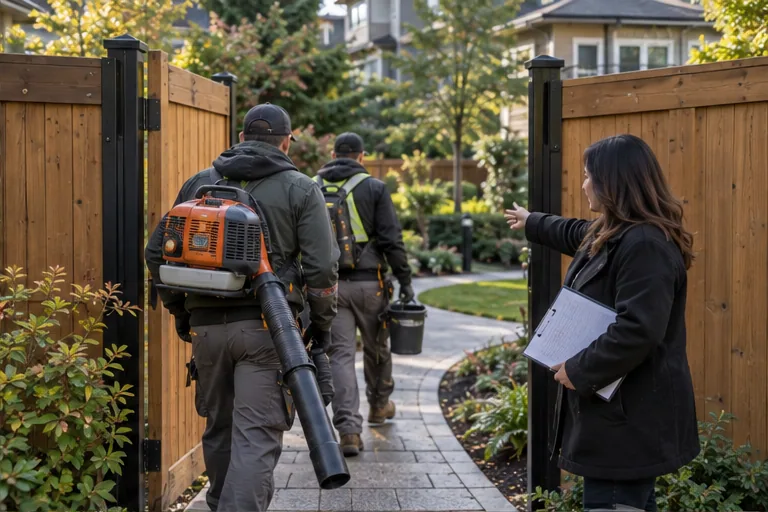
Decide who the contractor should contact (council or manager) for work approvals. Define the specific route crews should take and how residents will be notified about disruptive visits. You should also record how they will handle gate or key access, where they can store equipment, and any site-specific rules. Finally, establish how to report accidental damage or urgent hazards. Keep these contact and access instructions in a document that both the current and future strata councils can easily find.
Check the contractor’s paperwork for this engagement

Obtain the contractor's legal business name, insurance details, and a WorkSafeBC clearance letter where applicable. WorkSafeBC highlights why these clearance checks are important both before and after services to protect you from liability for unpaid premiums. Make sure you are checking the actual contractor, not just a similar-sounding trading name. Remember, a clearance letter proves their registration and standing; it isn't a review of their gardening skills or a replacement for a solid work scope.
Compare exclusions and changes alongside the bid total

Use a table to compare bids based on annual cost, service months, number of visits, included tasks, waste handling, material allowances, and exclusions. If a bidder leaves something out or is vague, ask them to clarify in writing. You need to know exactly how additional work is priced and authorized, and the contract should clearly state the terms for renewal or termination. Judge the bid on its scope and evidence; premium directory placement does not establish its suitability.
Keep a usable maintenance record at handover

BC strata guidance emphasizes that councils and managers need to keep repair and maintenance documentation as people change roles. Keep the signed scope, site plans, service records, approved changes, photos, and renewal dates all in one place. It is helpful to ask for a brief seasonal review that notes what was completed and what issues are still pending. This way, the next council can understand what was purchased, what needs work, and what is outside the contract without having to dig through old emails.
Put every tender on the same comparison sheet
Compare every bidder against the same criteria. If a bidder leaves a section blank, don't just assume it's included; ask them to confirm it in writing.
| Comparison row | What each bidder should provide |
|---|---|
| Price and service period | Annual total, tax, billing frequency, number of visits, and winter service details. |
| Measured inventory | Lawn and bed areas, hedge lengths, tree counts, irrigation zones, and access limitations. |
| Included and excluded work | Routine tasks, initial recovery work, material supplies, and waste removal. |
| Changes and records | Named approver, written process for extra work, service logs, and handover records. |
Enquiry checklist.
- Agree maintenance boundaries and measured inventory.
- Issue the same scope, site information, and bid questions to each contractor.
- Compare annual cost, season, tasks, allowances, and exclusions.
- Assign watering, communication, and change approval.
- Keep contract and service records for the next council.